Creating Conditions for Success: Upper School Gifted Education in Action
By Alberto Bassi-Smith, Sheila Nixdorf, Regan Todd, Nicole Trabold, Molly Vallejo, and Christopher Van Demark
At its best, gifted education is not simply about moving faster or learning more—it is about creating the conditions for students to think deeply, pursue their interests, and make meaningful contributions to the world around them.
In our recent blog post, The Five Keys to a Thriving Gifted Education Program, our K-12 Chief Gifted Education Specialist, Dan Rosenberg, explored the foundational elements that create these optimal conditions for gifted students to thrive. These essential principles come to life through the daily experiences students have in classrooms, labs, discussions, projects, and real-world learning opportunities.
To illustrate what gifted education looks like in action across disciplines at the Upper School level, our Department Coordinators shared insider perspectives of a student’s learning experience in their classrooms. In this post, we break a gifted Upper School student’s learning experience into four components:
- Personalization
- Emphasizing & Adapting Rigor
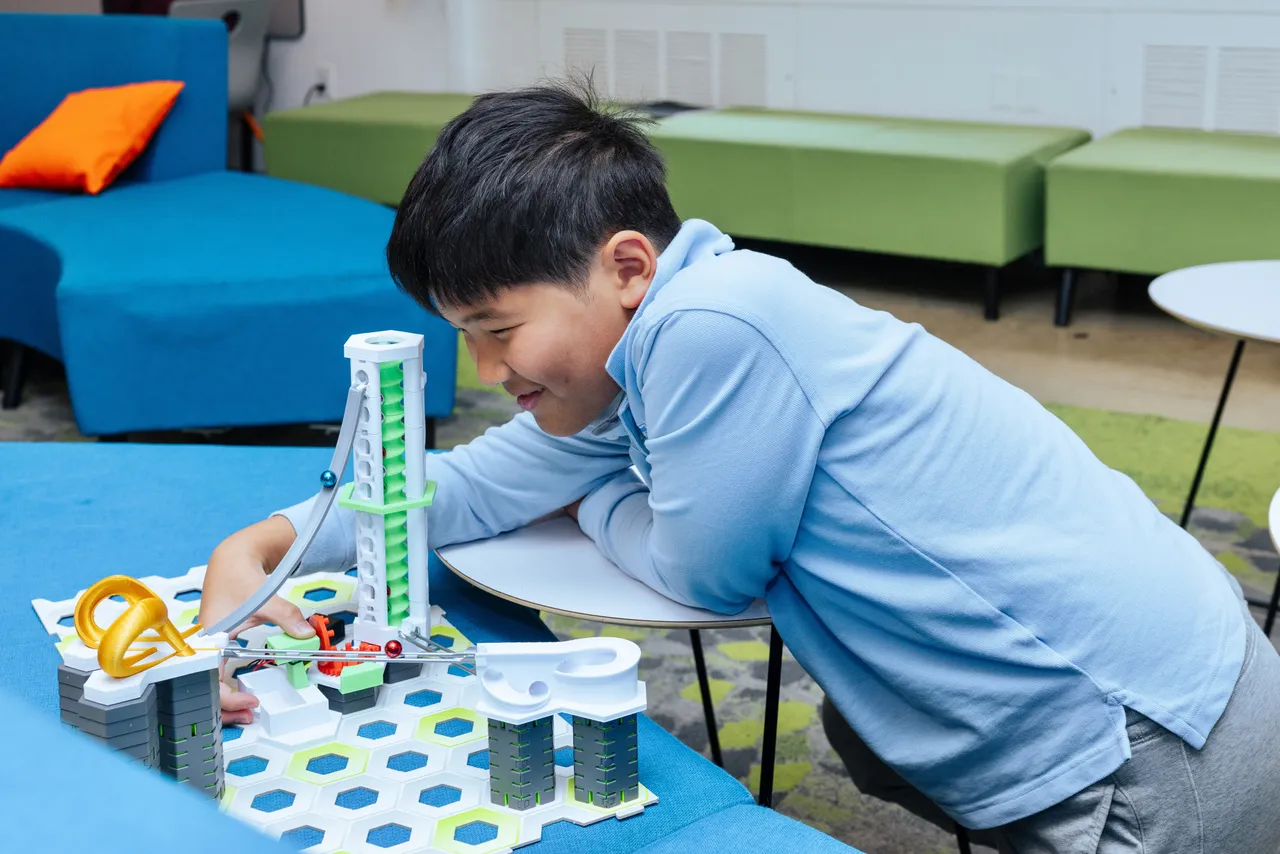
- Incorporating Hands-On Learning
- Connecting to the “Real World”
While you’ll see that every discipline seamlessly integrates every component, we’ve paired a singular discipline with each component to give you a deep-dive into what this looks like in action. From student-driven scientific inquiry and advanced research to creative literary analysis, authentic language immersion to hands-on mathematical problem-solving, these experiences demonstrate how personalized, rigorous, and relevant learning empowers students to take ownership of their education and grow into their unique talents.
Personalization: Student Ownership From Scientific Curiosity to Innovative Problem Solving
Science Department Coordinator, Sheila Nixdorf
In the science department, students engage with content in an inquiry-based investigative approach. At the middle school level, students begin to explore the science practices more formally. They investigate real-world problems like earthquake safety and build models to withstand tremors. Students learn about genetics through the lens of sickle cell anemia and investigate evolution by thinking critically about the biology of skin color.
As students progress into high school, rigorous, higher-level STEM elective courses, such as Neuroscience and Marine Biology, become available to them, allowing them significant choice in their course of study. In Neuroscience this year, students observed the behaviors and movements of transgenic C. elegans worms with a mutated version of nrx-1, an ortholog of a similar human gene associated with synaptic development and autism; their findings are novel. The Neuroscience students practice advanced laboratory techniques, data collection and analysis, and formal scientific writing.
One of our particularly science-focused seniors translated his love of biology, anatomy, physiology, and zoology into a senior capstone internship at a local veterinary office. He was able to visit the office once a week for two hours and gathered detailed notes on his experience, which he shared at our Fourth Annual Upper School STEM Exhibition.
Regardless of whether our science students are just beginning their exploration of the subject or are well on their way to a career in the sciences, our dedicated faculty tailor the content and experiences to the unique interests and talents of our students.
Emphasizing and Adapting Rigor: Developing Voice Through Analysis and Perspective
English Language Arts Department Coordinator, Nicole Trabold
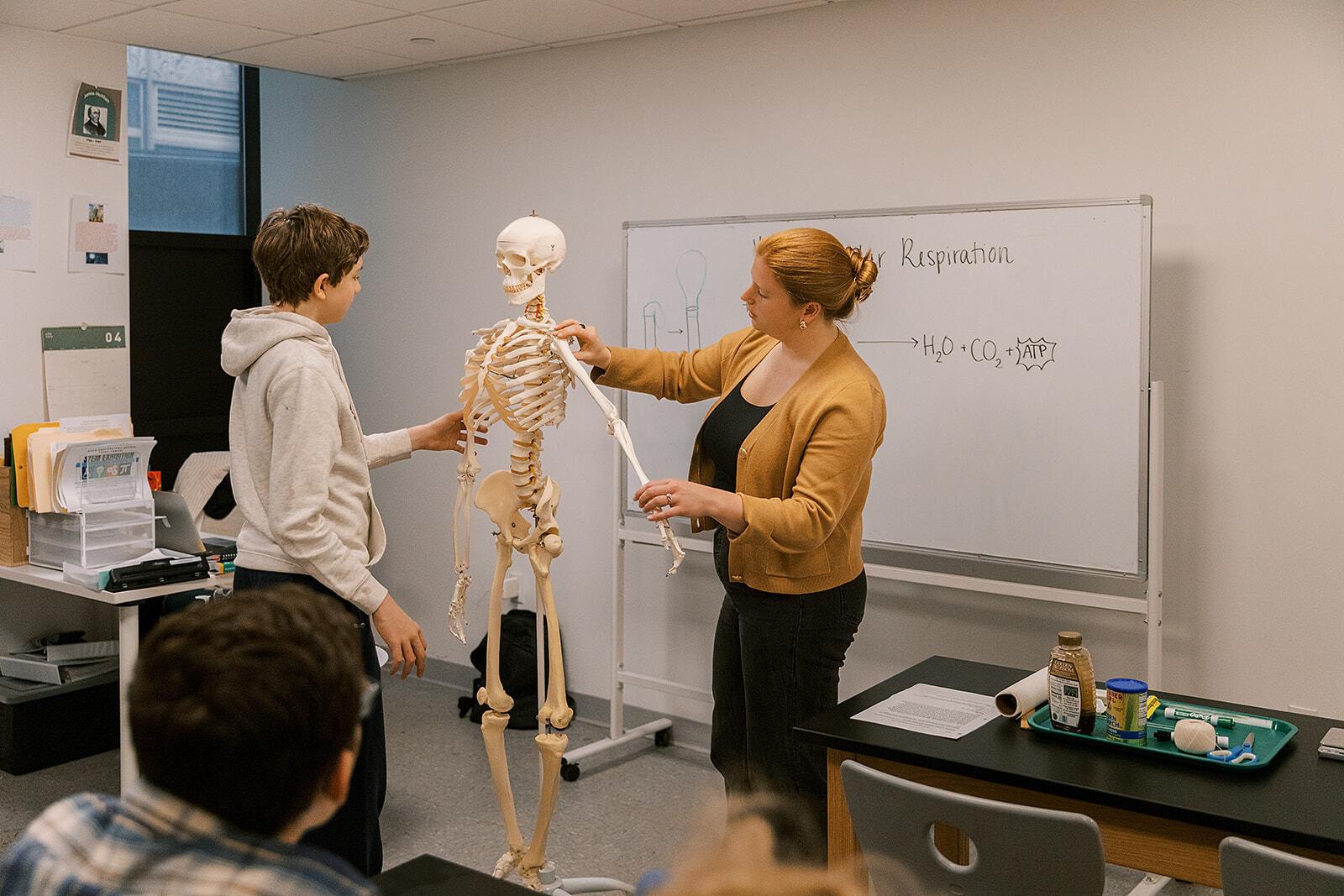
The English Language Arts curriculum is designed to develop students' analytical and critical thinking skills through a variety of engaging approaches. Texts selected for grades 6 through 12 have been intentionally curated to foster an enriching classroom environment that both supports student learning and broadens their thinking.
In middle school, personalization and creativity are central to many activities. For example, when reading Kwame Alexander's novel in verse, The Crossover, students engage with a text that departs from traditional prose. This story is told entirely through poems from the perspective of the main character, Josh. Students analyze figurative language, tone, mood, and point of view, then apply those skills by writing their own poems from an alternate character's perspective. This assignment challenges students to demonstrate not only their poetic craft but also their deeper understanding of the text and its characters.
In 8th grade, Animal Farm by George Orwell introduces students to rhetorical techniques such as propaganda. Building on that knowledge, students create their own propaganda pieces, choosing a topic that allows for personal investment while demonstrating their command of persuasive language and their ability to target a specific audience.
Incorporating Hands-On Learning: Research as a Pathway to Ownership and Discovery
History Department Coordinator, Christopher Van Demark
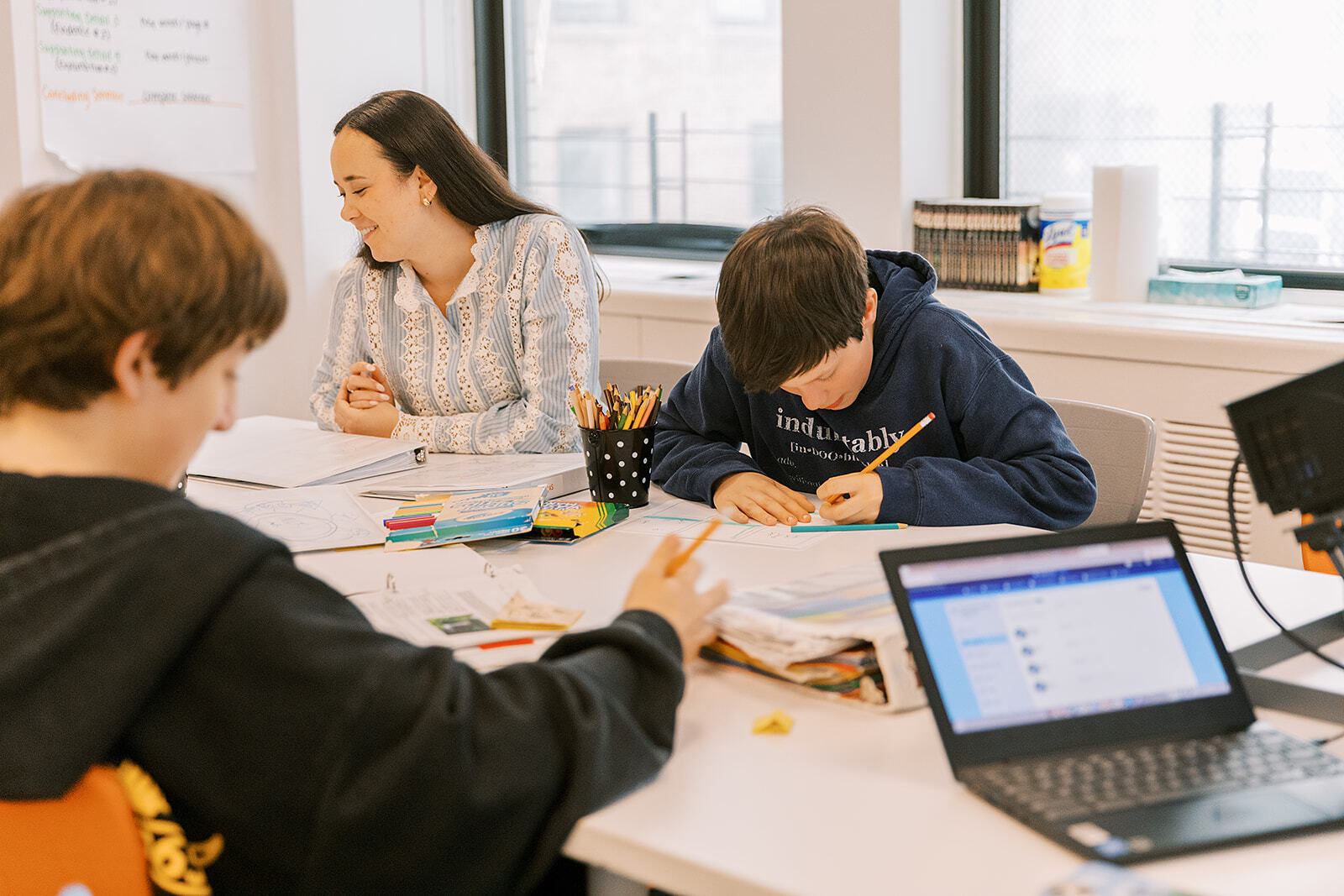
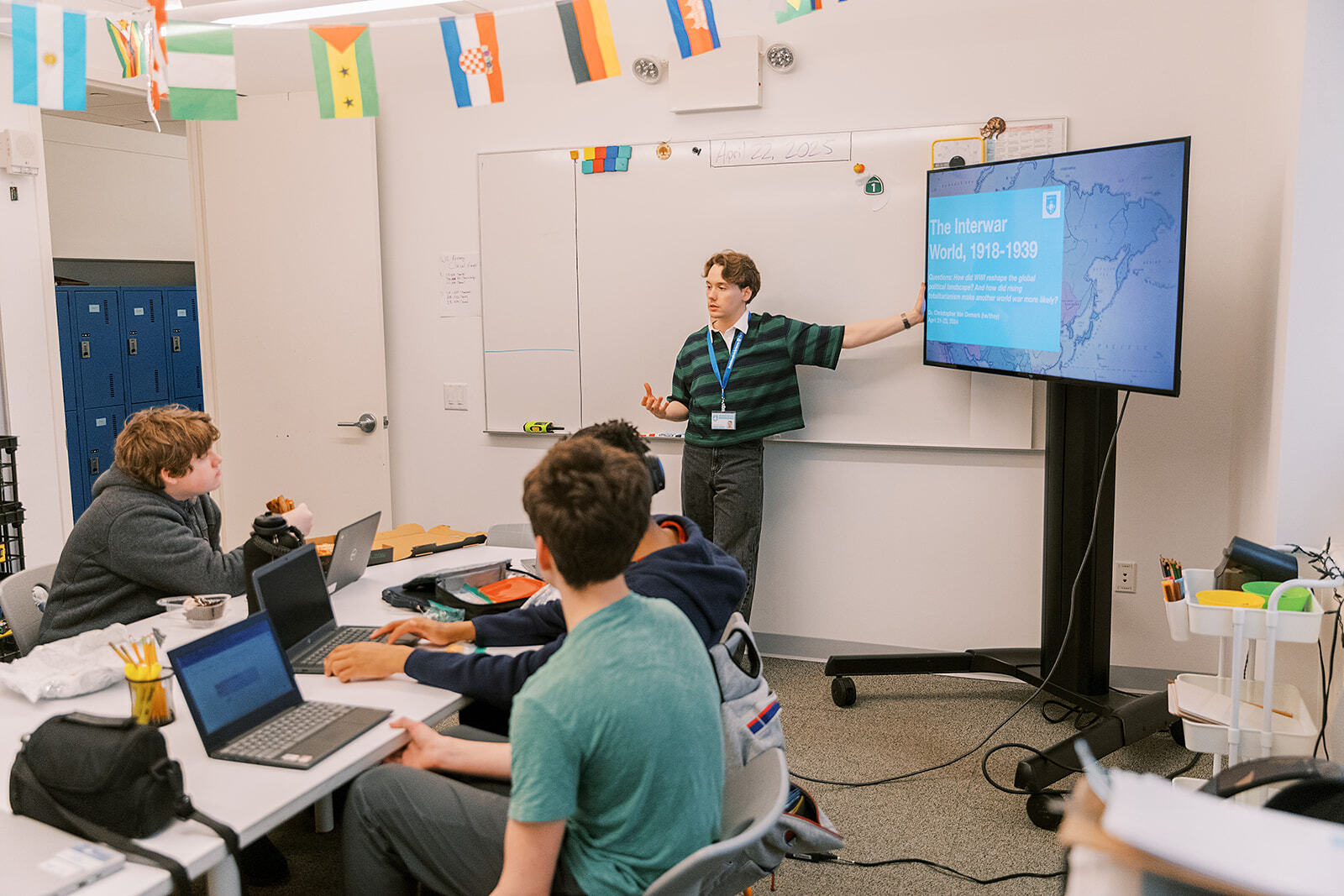
Every year, my Global History II class culminates in a capstone research project that asks students to select a topic, conduct semi-independent research, and produce a research paper reporting on their findings. It is an arduous task for my ninth-graders, who have often never completed an assignment on that scale. The academic skills students cultivate over the course of the three-month-long project—critical thinking, perspective-taking, research independence, primary/secondary source processing, to name a few—only capture one dimension of the multifaceted set of competencies developed through sustained historical inquiry.
The spring research project opens with a choice—students are asked to select a topic of interest that relates to a subject covered in class. Affording some autonomy from the outset allows students to shape their own learning and helps sustain motivation and momentum. Over the years, their projects have run the gamut, from the dialectic between science and religion in Mary Shelley’s Frankenstein to the global history of refrigeration. Despite the variance, I have noticed a pattern when reviewing students’ papers. More often than not, they include their middle names on the title page, regardless of the year or class. This formality highlights an important yet underappreciated component of sustained inquiry: a sense of ownership and pride.
Connecting to the “Real World”: Bringing Language and Culture to Life
World Languages Department Chair, Alberto Bassi-Smith
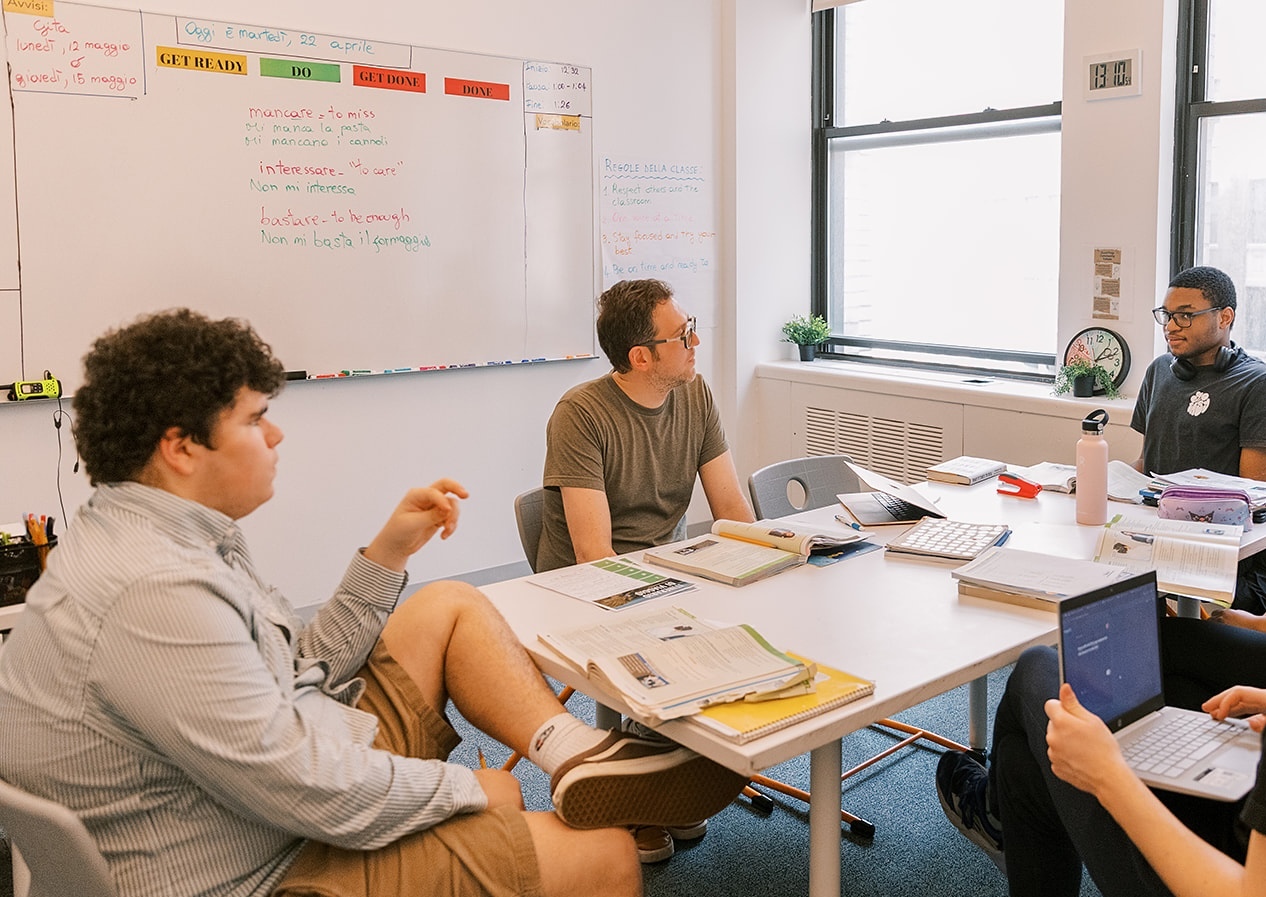
In World Languages, students develop advanced communication skills by using the target language in meaningful, real-world contexts while engaging in challenging learning experiences. Our curriculum encourages students to think critically, make interdisciplinary connections, and explore diverse cultural perspectives.
To achieve this goal, students engage with authentic materials, including news articles, videos, literature, music, and primary sources from around the world. Through discussions, debates, interviews, and written reflections, they analyze complex topics and communicate their ideas using increasingly sophisticated vocabulary and language structures. Learning experiences extend beyond language acquisition to include history, geography, art, and current events.
I encourage my students to express their knowledge in a way that is meaningful to them. Students may create art collages inspired by influential artists and discuss the philosophies and cultural movements behind their work in the target language. They also plan trips by researching a country’s history, geography, landmarks, and traditions, applying language skills to realistic travel scenarios. Other experiences include preparing for and conducting interviews with officials during visits to cultural institutions and consulates, such as asking questions about current cultural events, immigration, and international cooperation.
In advanced courses, students engage with authentic, unadapted materials rather than simplified texts. For example, my Advanced Italian students explore excerpts from Dante and study opera through original sources, developing both linguistic proficiency and cultural literacy. Collaborative projects, cultural simulations, presentations, and real-world role-plays foster creativity, problem-solving, and confidence. High school students can further deepen their learning through advanced conversation courses and Teaching Assistant opportunities that promote leadership, mentorship, and independent learning.
Tying It All Together: Where Strengths, Rigor, and Relevance Intersect
Math Department Coordinator, Molly Vallejo
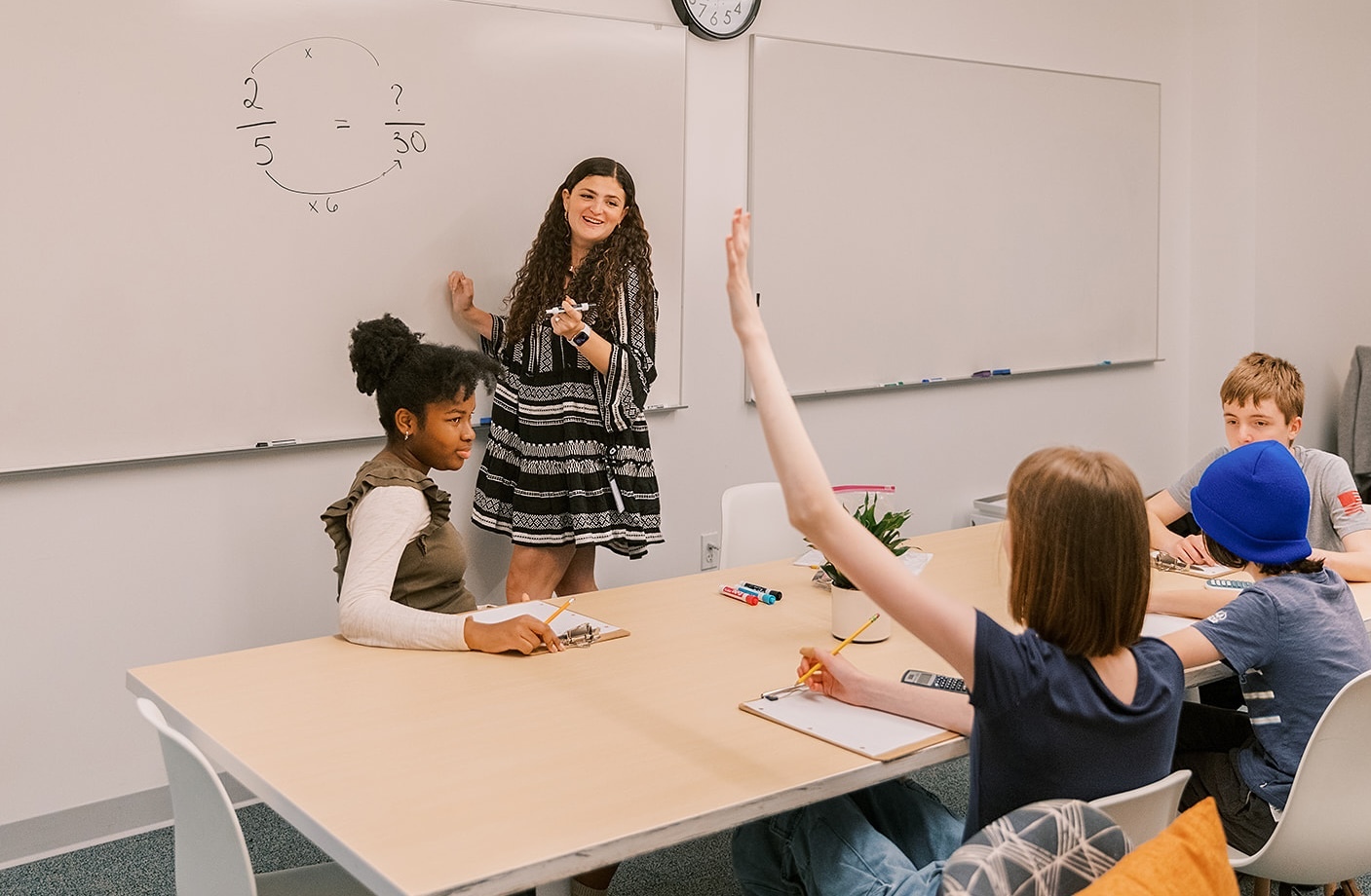
At Quad Prep, we believe math instruction works best when it starts with student strengths, not deficits, especially for twice-exceptional learners. In each classroom, personalization is student-driven while differentiation is teacher-driven, both with a common goal of building and maintaining rigor through critical thinking and perspective-taking.
In practice, this could look like one of my geometry classes this year, where students built clinometers using a protractor, a straw, a string, and a weight. Then, they traveled to the nearby South Street Seaport for a trigonometry unit-aligned field trip to measure the height of a real building, applying tangent ratios to a genuine engineering problem. This hands-on, project-based rigor works especially well for 2e students because it lets them demonstrate critical thinking and perspective-taking through doing, modeling, and testing, rather than bypassing writing or processing barriers that can mask their abilities. It also translates directly to real-world experience: students use the same trigonometry that surveyors and architects rely on, turning formulas into tools for solving problems they can see and touch. Along the way, the project naturally integrates other disciplines and student interests, blending physics, engineering, and design, with students free to extend their research toward architecture, art, or astronomy.
Bringing real-world experience into my classroom turns gifted education from theory into something students can see, touch, and own. We know our students have an incredible capacity for STEM excellence, and by leading with strength-based instructional techniques, utilizing meaningful differentiation, and tying in invaluable hands-on learning opportunities, our students thrive.
A not-for-profit independent college preparatory school, Quad Prep’s rich and robust curriculum engages, challenges, and inspires students at all levels, K–12, through our Lower School and Upper School programs. Quad Prep does not discriminate on the basis of race, color, religion, sex, gender identity or expression, sexual orientation, national and ethnic origin, ancestry, age, marital status, disability, or any other characteristic protected by law. This policy applies to, but is not limited to, educational policies, admission, financial consideration, hiring and employment practices, use of school facilities, athletics, and other school-administered programs.