Neurodiversity 101: What is it?

By Regan Todd | Senior Manager, Communications
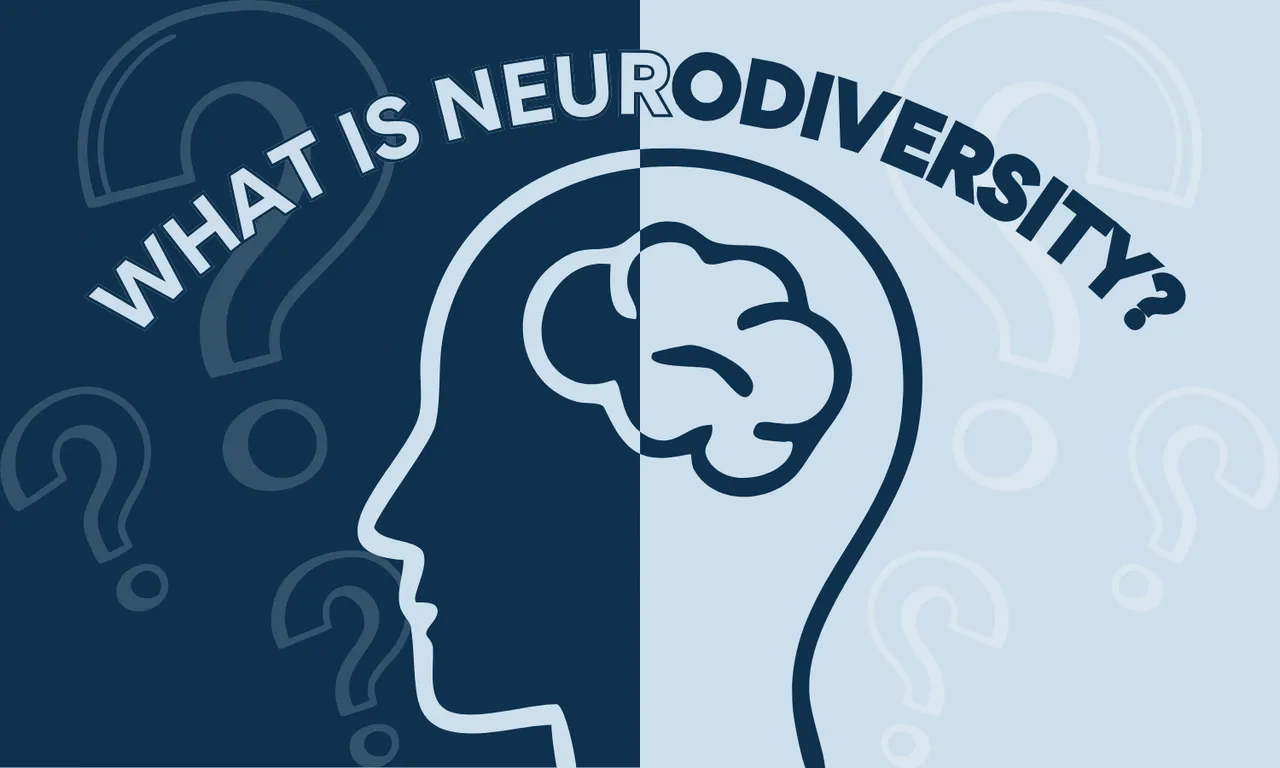
In the last few years, you’ve probably heard April called Neurodiversity Awareness Month…but what does that actually mean?
Celebrating neurodiversity means celebrating the different ways our brains are wired. As a community built upon the acceptance and celebration of neuroinclusion, it is so exciting for us to see companies, community establishments, and advocacy groups rally around the neurodivergent community in such a beautiful way in April.
To help you understand what neurodiversity is all about, we’ve answered some common questions including what it is, why it matters, and how you can help celebrate it.
What is neurodiversity?
Neurodiversity is the idea that all human brains have natural variations that result in different ways of processing information and that there is no “right” way to think. We are all neurodiverse; we all have our own way of thinking, communicating, and perceiving the world that makes us unique.
People often refer to two categories under the umbrella of neurodiversity: neurotypical and neurodivergent, which exist along a spectrum. Let’s unpack the difference.
What is the difference between neurotypical and neurodivergent?
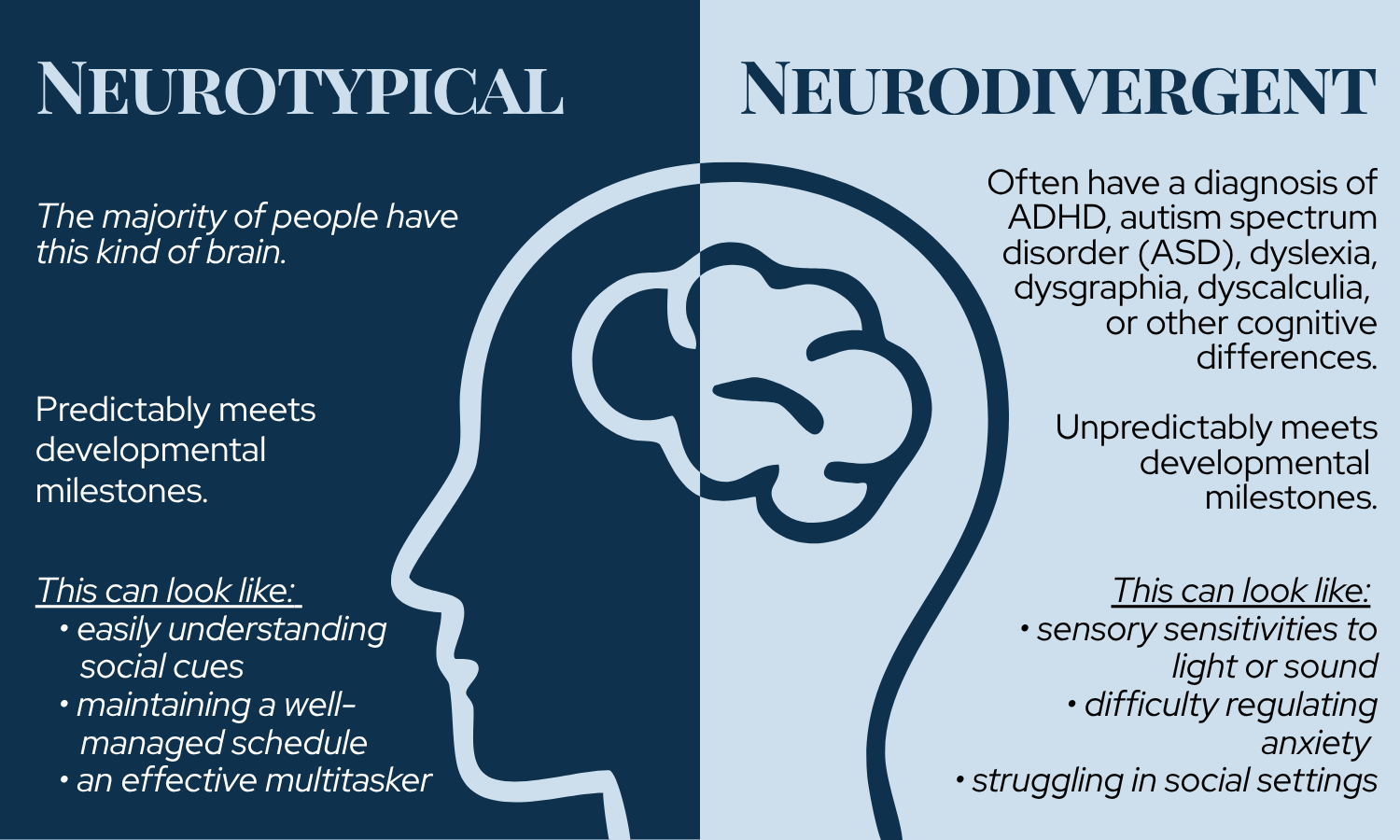
A neurotypical brain is the type that the majority of people have, and can be defined as one that predictably meets developmental milestones. This can look like someone who easily understands social cues, can maintain a well-managed schedule, or is an effective multitasker.
A neurodivergent brain can be defined as one that unpredictably meets or might not meet developmental milestones. Individuals who identify as neurodivergent often have a diagnosis of ADHD, autism spectrum disorder (ASD), dyslexia, dysgraphia, dyscalculia, or other cognitive differences. This can look like someone who has sensory sensitivities to light or sound, has difficulty regulating anxiety, or struggles in social settings.
Let’s break this down a bit further.
What does neurodivergence look like?
There’s a common saying, “If you’ve met one neurodiverse person, you’ve met one neurodiverse person.” In other words, each neurodivergent individual is unique, and each diagnosis comes with a different set of strengths and challenges.
However, because we’ve researched, studied, and honed our program specifically for gifted, neurodivergent K-12 learners, we’ve identified a few common threads:
Gifted neurodivergent learners often have intellectual and creative strengths like…
- Advanced vocabulary, reasoning, or verbal skills
- Deep curiosity and intense interest in specific topics
- High levels of creativity and original thinking
- Strong memory or exceptional knowledge in specific areas
- Preference for complexity, abstract thinking, or problem-solving over rote routines
- High levels of empathy or emotional insight
- Rapid learning when engaged
Gifted neurodivergent learners often have challenges and differences like…
- Difficulties with organization, planning, and time management (executive functioning)
- Sensory sensitivities (to noise, texture, light, etc.)
- Trouble with social cues or relationships
- Anxiety, perfectionism, or fear of failure
- Inconsistent performance and asynchronous development (e.g., brilliant in one area, struggling in another or maturity lagging behind intellectual development)
- Difficulty tolerating the unexpected and difficulty transitioning away from topics of interest.
- Easily bored or disengaged in traditional learning environments
Here’s how this can show up in real life.
What “norms” can create challenges for neurodivergent individuals?
Traditional K-12 schools
In a traditional classroom, students are expected to sit still for extended periods of time and show they’re paying attention by keeping their bodies calm and eyes on the teacher. For a student with ADHD or sensory processing differences, that physical stillness can be uncomfortable or even distressing, making it harder to focus. What looks like fidgeting or distraction is often a response to a classroom environment built around quiet, stationary bodies as a sign of learning, which can unintentionally work against how some students regulate attention and engagement.
University/College
In coursework, grades often hinge on a few high-stakes exams with strict time limits and little flexibility in format. For a student with dyslexia or processing differences, the challenge isn’t understanding the material—it’s decoding dense text quickly and demonstrating knowledge under pressure. What appears to be underperformance can reflect a system built around speed and timed recall, rather than depth of understanding, which is unintentionally disadvantageous to students who process information differently.
Workplace
At a team meeting, everyone talks over one another, relying on quick pacing and subtle cues to signal when it’s “your turn” to speak. For someone with ADHD or autism, that unspoken rhythm can be difficult to process in real time, so by the time they’re ready to contribute, the conversation has already moved on. What looks like disengagement is often the result of a system built around fast verbal participation and eye contact—one that can unintentionally exclude those who communicate or process differently.
As these examples show, many of the norms we take for granted are not neutral—they’re designed around a “typical” range of ways of thinking, learning, and interacting. Rethinking who those norms serve is an essential step toward creating more inclusive environments.
How does Quad Prep’s program for twice-exceptional students incorporate neuroinclusion?
At Quad Prep, our students are all neurodivergent. Their twice-exceptional (2e) profile means they are gifted students who:
1. Possess high intellectual potential or academic talent
and
2. Have learning, attention, or social-emotional differences.
In other words, 2e learners are neurodivergent in two ways: they are gifted and they learn differently.
(You’ll notice we say “and” a few times here. That’s really what twice-exceptionality—and the Quad Prep commitment—comes down to: we don’t look at just one component or the other, we’re interested in supporting the whole person.)
So, what can you do to support neuroinclusion?
How can we advocate for and celebrate neurodivergent voices and perspectives?
- Empower. Center neurodivergent voices in conversations, not only about neurodiversity, but in every field. Amplify these voices, affirm their value, and advocate for their place in the conversation.
- Reflect. Assess your work or school practices to better support neurodivergent individuals. How can your classroom practices be more sensory-friendly? How can your office practices accommodate alternative pathways to productivity? How can public spaces be designed with neuroinclusivity in mind?
- Share. Are you researching new pathways toward greater neuroinclusivity? Do you currently have neuroinclusive practices that work? Share what you know, and we can all help multiply your impact.
- Learn. Attend a Breakthroughs in Twice-Exceptional Futures Conference. This annual summit is where neuroinclusive ideas are bolstered and advanced. When we challenge our thinking, we expand the possibilities for a more neuroinclusive future—in education and beyond.

A not-for-profit independent college preparatory school, Quad Prep’s rich and robust curriculum engages, challenges, and inspires students at all levels, K–12, through our Lower School and Upper School programs. Quad Prep does not discriminate on the basis of race, color, religion, sex, gender identity or expression, sexual orientation, national and ethnic origin, ancestry, age, marital status, disability, or any other characteristic protected by law. This policy applies to, but is not limited to, educational policies, admission, financial consideration, hiring and employment practices, use of school facilities, athletics, and other school-administered programs.