Language Learning Through Culture and Creativity

By Emma Sorkin
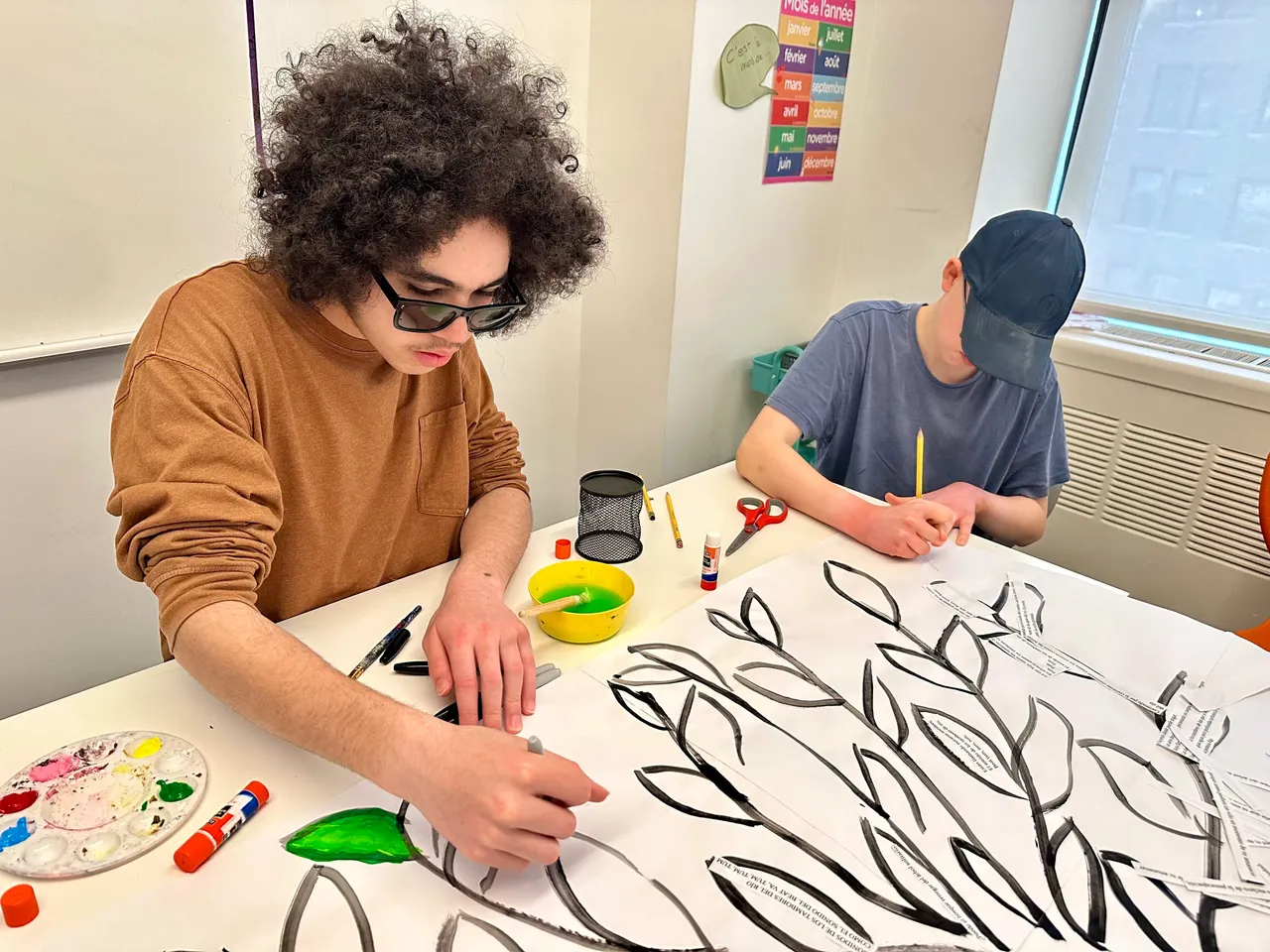
Rita Murray’s middle school World Language classroom might physically be in Manhattan, but upon entering the room, students are transported across the world. Flags from Spanish and French-speaking countries line the walls, and music in many languages plays throughout the room as students file in.
“Full immersion is fundamental to learning a language. When we learn a language and are surrounded by it, there is a lot our brain captures that is not an active process of learning. I try to immerse students in experiences that are not just linked to direct language learning, but also create opportunities in which they can rely on passive learning, such as being exposed to songs, traditions, and conversations,” Rita says.
In the fall of 2014, Quad Prep’s World Language Department was a department of one. The current World Languages, Art, & Culture department now offers four languages (Italian, French, Spanish, and Latin) with more on the way in the coming school year. World Language classes encompass a fully integrated curriculum that pairs linguistic and cultural learning with individualized options for twice-exceptional learners.
Alberto Bassi-Smith, World Languages, Art & Culture Department Head and founding member of the Quad Prep World Languages team, says this intersection is crucial to broadening the scope of language learning.
In any given cohort of students, interests can range from grammar to historical novels to classic opera—and once identified, Alberto and the World Languages team enrich each student’s language learning experience by integrating their individual interests into their lessons.
This year, Rita partnered with Upper School Humanities Associate Teacher Naomi Lisiki to bring art into her French and Spanish classes.
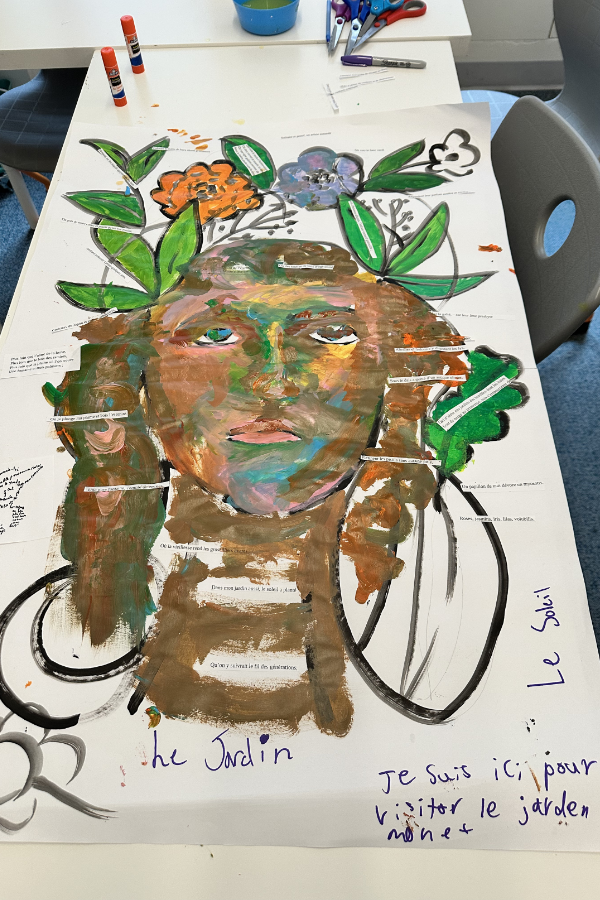
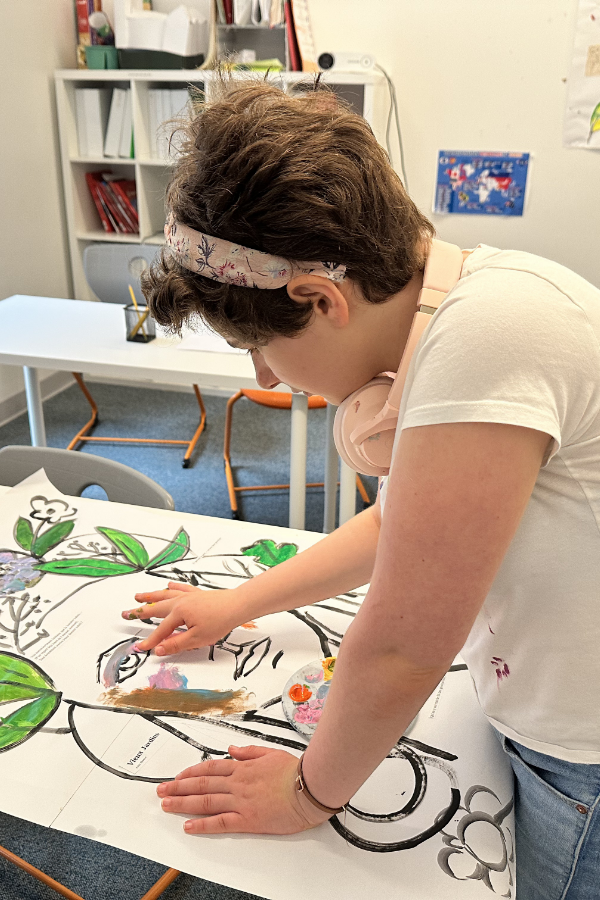
“The goal of the project was to bring together language and art through personal expression, approaching language as a creative medium shaped by individual voices within a collective experience,” Rita says.
Students worked with a visual prompt: a tree for Intro to Spanish II and a woman’s face with flowers for Intro to French II. They then used poems in each target language, selecting and reassembling sentences to express meaning, emotion, and imagination directly onto the artwork.
For some twice-exceptional students, however, language learning can come with specific challenges related to anxiety, verbal processing, or other specific learning needs. Through practice, the process of learning a language can build resilience.
“A lot of students develop anxiety when they are confronted with speaking. Presenting or learning topics in a context that will stimulate other areas of their brain and their personal knowledge or interests that they feel comfortable with has a positive impact on language learning,” Rita says. “In the long term, language learning is beneficial, because it is a field in which they are constantly faced with a challenge and learn how to handle it, how to get better, and how to become less anxious.”
Creating different levels of complexity and support based on the challenges each student might face is essential to this process. Whether that’s visual resources, scaffolding, or 3D tools, teachers ensure students have what they need to be successful, lifelong language learners.
For Rita, the learning experience in middle and high school can be transformative and foundational for college-level courses and beyond.
“I’m trying to be creative in the way in which I can engage them and stimulate their creativity. I want to show my students that learning a language can be funny and creative, that they can laugh and have a good time while developing a skill they’ll use for the rest of their lives. I want to transmit to my students the passion and love that I have for foreign languages so that they can understand how beautiful it is to experience different mindsets and to be able to understand different cultures,” Rita says.
Whether it’s building confidence and resilience, laying the foundation for a lifelong love of learning, or deepening the ability to take on a multitude of perspectives, there’s a benefit to language learning for every Quad Prep student. Through the care and creativity of our World Language team, our students are well-equipped to take on the challenge.
A not-for-profit independent college preparatory school, Quad Prep’s rich and robust curriculum engages, challenges, and inspires students at all levels, K–12, through our Lower School and Upper School programs. Quad Prep does not discriminate on the basis of race, color, religion, sex, gender identity or expression, sexual orientation, national and ethnic origin, ancestry, age, marital status, disability, or any other characteristic protected by law. This policy applies to, but is not limited to, educational policies, admission, financial consideration, hiring and employment practices, use of school facilities, athletics, and other school-administered programs.