Executive Functioning: What it is and Why it Matters

By Athena Stagias, MS, CCC-SLP | Interim Upper School Co-Head, Clinical Chief Executive Functioning Specialist, K-12 & Emma Sorkin
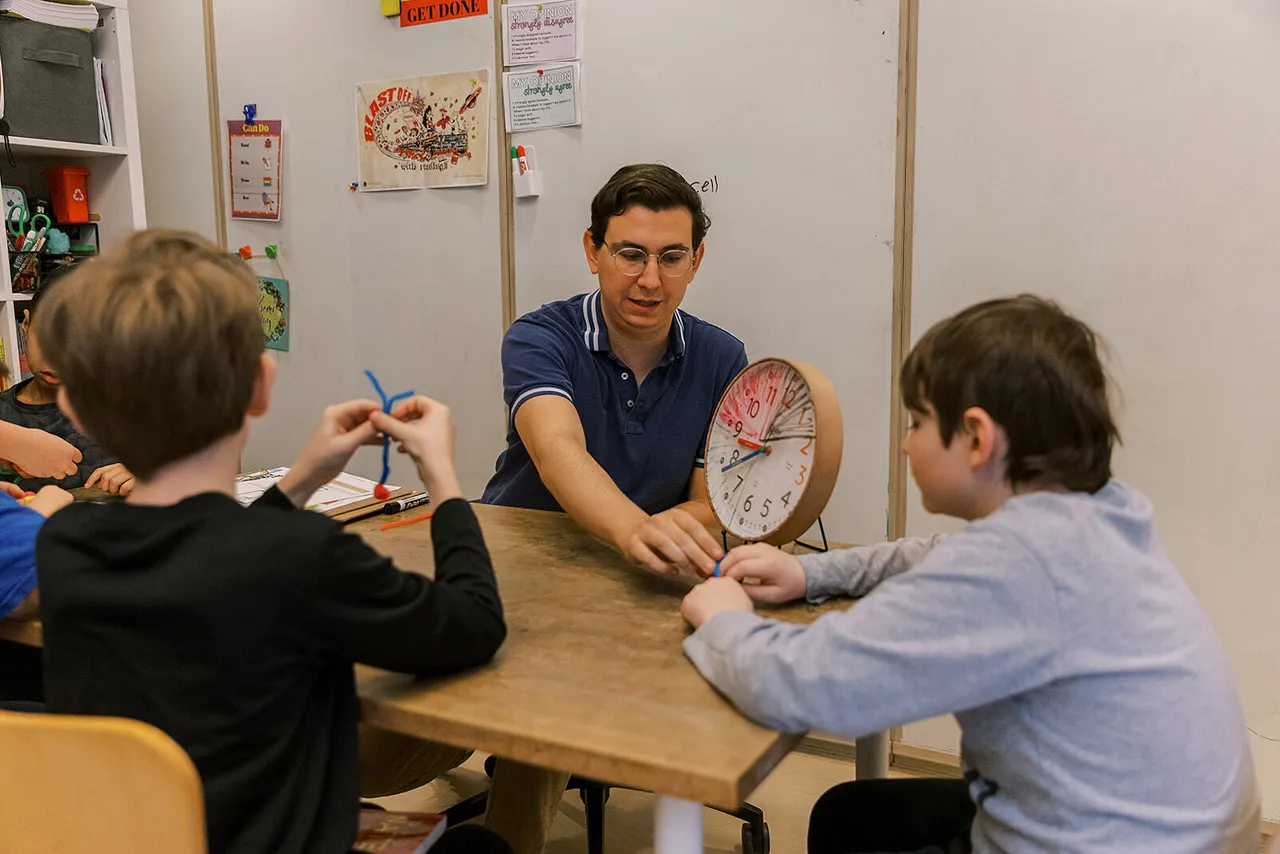
You’ve probably heard the term executive functioning mentioned when talking about education and twice-exceptionality. But what is executive functioning really? Why does it matter?
What is executive functioning?
Executive functioning (EF) refers to the cognitive processes that help us plan, organize, and complete tasks, manage time, and regulate emotions. EF encompasses all the skills and mental processes that one needs in order to achieve a goal, whether that’s a smaller goal like making a peanut butter and jelly sandwich or getting to school on time, or a bigger goal like graduating from college or getting a new job.
Why does executive functioning matter, particularly for 2e students?
Planning, organizing, time management, perseverance, and other critical EF skills are foundational for academic achievement, personal growth, and overall independence—especially for 2e students.
Many 2e students struggle with EF in some form, depending on their unique learning profile. These struggles impact students inside and outside the classroom, as well as after they leave Quad Prep. EF skills are not just academic skills—they’re life skills.
2e students have a lot of potential, and challenges with executive functioning skills can hold them back from being able to showcase their gifts.
What does effective executive functioning support look like?
Neurodiverse, gifted students participate in a carefully crafted, comprehensive, school-wide EF program, grounded in cutting-edge, evidence-based methodologies from world-renowned EF experts Sarah Ward and Kristen Jacobsen. Our implementation of these methodologies is critical to the success of twice-exceptional students. Our program is built on the following core beliefs:
- EF is integrated into all aspects of every student’s personalized, gifted academic curriculum to ensure skills are not taught in isolation. When EF support is seamlessly embedded into daily academic experiences, students are given space to immediately apply what they learn to real-world challenges.
- The full team of staff members matters—educators and clinicians alike. When the full team is thinking about EF and incorporating supports and principles into their work, students are given the consistency and repetition they need.
- Proactive, hands-on, individualized interventions are key. Tailoring growth plans to meet the unique needs of each gifted, 2e learner allows everyone to excel academically and beyond.
- Vertical alignment ensures developmentally appropriate progression. A vertically-aligned model from grades K-12 ensures students learn important concepts throughout the year in a developmentally appropriate way, as well as progressively build their EF skills over time.
Take Ellie, a third grader, for example. When she arrives at school, she looks at the visual checklist taped to the inside of her locker. “I need my binder, planner…What else? Oh, my homework folder!” Grabbing her materials, she heads to class.
At her desk, she grabs her planner and writes down the homework for the coming week. After placing her planner back in her binder, she looks at the clock. With three minutes until morning meeting, Ellie heads to her designated spot on the carpet.
How was Ellie’s morning routine so successful? In the Lower School, students are surrounded by a variety of EF tools and supports. This puts them in charge of their learning and EF development. By 12th grade, students will be prepared to pull out a specific tool they know works for them. This progression fosters independence and develops EF skills in a developmentally appropriate way.
Why does an integrated executive functioning model work best?
Athena Stagias, Quad Prep’s Chief Executive Functioning Specialist, has seen a dramatic shift in students’ skill retention when integrated into academics compared to when practiced in isolation. When students go from math to movement to ELA without forgetting about EF, that’s a huge win—and proves that integrating these skills and generalizing them across subjects works best.
Integrating also challenges our educators and clinicians to collaborate in new ways to pioneer new ways of thinking about EF. Throughout each year, we provide continuous training for our faculty so they can better partner with families to create a cohesive support system:
- Faculty members across all grades in both academic and clinical roles receive regular training to embed EF strategies into their work.
- This training ensures that tools are shaped to fit the needs of each class or session and that students experience consistent messaging across settings.
- Families gain actionable tips to reinforce EF skills at home through parent meetings, video newsletters, and on-demand resources.
It’s simple: strengthening EF skills improves outcomes for twice-exceptional students. Our students already have what it takes to succeed—we’re just providing them with the EF skills and tools to achieve their goals and enhance their potential.

A not-for-profit independent college preparatory school, Quad Prep’s rich and robust curriculum engages, challenges, and inspires students at all levels, K–12, through our Lower School and Upper School programs. Quad Prep does not discriminate on the basis of race, color, religion, sex, gender identity or expression, sexual orientation, national and ethnic origin, ancestry, age, marital status, disability, or any other characteristic protected by law. This policy applies to, but is not limited to, educational policies, admission, financial consideration, hiring and employment practices, use of school facilities, athletics, and other school-administered programs.